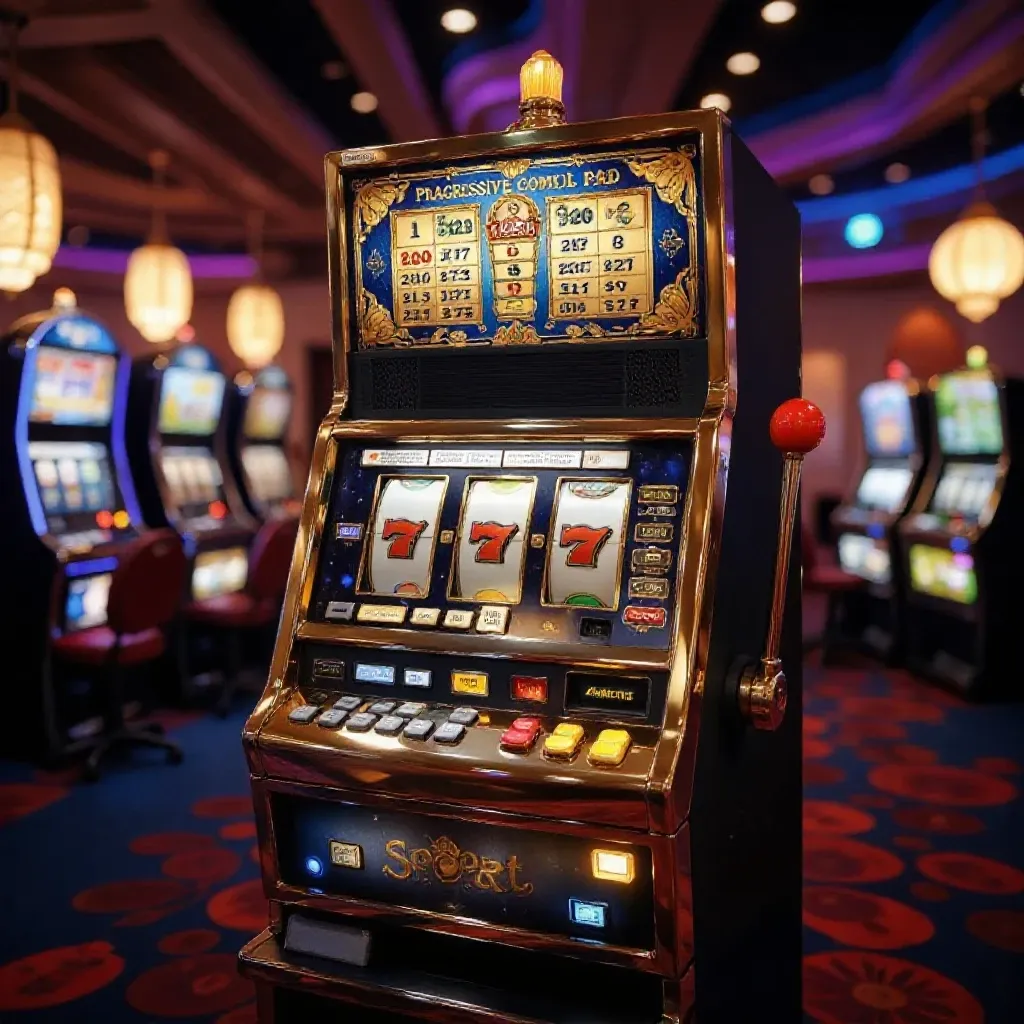
Imagine hitting the jackpot that could change your life in an instant. This is the siren song of progressive jackpots, those ever-growing prize pools that lure players into the exciting world of online slots and casino games. The allure is undeniable: a relatively small wager could unlock a fortune.
Progressive jackpots work by pooling a portion of every bet placed on a particular game across a network, causing the jackpot to swell continuously until one lucky player hits the winning combination. But chasing these elusive prizes comes with its own set of considerations. It’s a world where dreams collide with reality, and understanding the dynamics of risk versus reward is paramount.
Take the story of Sarah, a casual online slots player who, on a whim, decided to try her luck on a progressive jackpot game. A few spins and a small bet later, the screen lit up, announcing her as the winner of a multi-million-dollar jackpot. It’s a story that fuels the dreams of many, but it’s essential to approach progressive jackpots with both excitement and a healthy dose of realism.
What are Progressive Jackpots?
A progressive jackpot is an ever-increasing prize pool for a casino game or slot machine. Unlike a traditional, fixed jackpot with a set payout amount, a progressive jackpot grows with every bet placed on the game across a network until someone wins. Think of it as a shared piggy bank that everyone contributes to, making the potential payout extremely lucrative.
Here’s how it works: A small percentage of each wager—often just a few cents—is added to the overall jackpot. This contribution continues relentlessly, fueling the prize until a lucky player hits the winning combination. Each progressive jackpot starts with a predetermined ‘seeded amount’ to make it attractive from the beginning.. The winner is determined by a random number generator (RNG), ensuring fairness and unpredictability in the outcome. The RNG selects at random when the progressive jackpot will be paid out.
Types of Progressive Jackpots
Progressive jackpots come in different forms, each affecting the potential payout and odds of winning. Understanding these variations is key for anyone chasing that life-changing win. The main types are standalone, local (or in-house), and wide-area (or networked) progressives.
Standalone progressive jackpots are specific to a single machine. The jackpot grows only when that particular machine is played. Consequently, these jackpots tend to be smaller, but the odds of winning are generally better compared to other types.
Local progressive jackpots, also known as in-house progressives, link several machines within the same casino. Because more players contribute, the jackpot increases faster and reaches a higher amount than standalone progressives.
Wide-area progressive jackpots, or networked progressives, connect machines across multiple casinos, sometimes even across different states. These are the jackpots that often reach colossal sums, potentially millions of dollars. However, the odds of winning are significantly lower due to the vast number of players contributing to the network. This is because the more people that are playing in the network, the higher the chances are of someone winning the jackpot.
The Allure of Progressive Jackpots
Progressive jackpots possess a magnetic charm that extends far beyond the sheer monetary value they represent. The psychology of gambling reveals a complex interplay of factors that fuel this attraction. It’s not simply about the dream of winning big; it’s about the experience itself.
One key element is the ‘near-miss effect.’ When players almost win, they become convinced that they are getting closer to the jackpot, fueling their desire to continue playing. The variable reward schedule also plays a significant role. The unpredictable nature of when the jackpot will hit creates a sense of excitement and anticipation. Each spin holds the potential to be the life-changing one, and this possibility keeps players engaged.
The hope and anticipation associated with progressive jackpots are powerful motivators. Players envision what they would do with the winnings, adding an emotional dimension to the game. For some, the communal excitement surrounding a large jackpot is also appealing. Watching the prize pool grow and imagining the moment of victory alongside others can create a sense of shared experience and heightened anticipation.
The Cold Hard Math
Progressive slots, with their life-altering jackpot potential, exert a magnetic pull on players. However, beneath the shimmering allure lies a cold, hard mathematical reality. Understanding the mechanics of return to player (RTP), the odds of hitting that elusive jackpot, and the inherent slot volatility is crucial for any player considering taking a chance on these games. The truth is, while the dreams of instant riches are real, the probability of realizing them is statistically slim. Progressive slots often have a lower RTP than standard slots because a portion of each wager contributes to the ever-growing jackpot. This means that, on average, the slot is designed to return less money to players in the long run compared to non-progressive alternatives. Slot volatility further complicates the picture, influencing how often you can expect to win and the size of those wins. It’s a high-risk, high-reward scenario where patience and a clear understanding of the odds are paramount. It’s important to have a practical outlook when playing progressive slots, as the odds are not in the player’s favor.
RTP (Return-to-Player) Demystified
Return to player (RTP) is a key concept for slot players. It represents the percentage of all wagered money that a slot machine is expected to pay back to players over an extended period, usually millions of spins. For instance, a slot with an RTP of 92% theoretically returns $92 for every $100 wagered. However, it’s important to remember that RTP is a theoretical calculation, not a guarantee of what any individual player will experience in a single session. This percentage is calculated over a huge amount of spins. Before playing, verify the RTP of a slot, usually found in the game’s information or help section. Regulatory bodies and independent testing agencies often audit online casinos and slot game providers to ensure the RTP is fair and accurate. By searching for the game’s name and “RTP” online, this information can usually be found on reliable gambling information sites.
Understanding House Edge
The house edge is the casino’s advantage in any game, representing the percentage of each bet the casino expects to retain as profit. It’s the inverse of the RTP. If a progressive slot has an RTP of 92%, the house edge is 8%. It is calculated by subtracting the RTP from 100%. Understanding the house edge provides clarity on the long-term profitability for the casino and the potential cost to the player. While individual sessions can yield wins, the house edge ensures that, over time, the casino will statistically profit.
Playing Strategically: Smart Bets
Smart gambling isn’t about finding a guaranteed win – it’s about making informed decisions and protecting your resources. Think of your gambling budget as an entertainment expense, similar to going to the movies or a concert. The key is to enjoy the experience without risking financial hardship.
Effective bankroll management is crucial. Before you even think about placing a bet, decide how much you’re willing to spend – and, more importantly, lose. This is your gambling bankroll, and it should be separate from your essential funds. Once you’ve set your limit, stick to it. A great tip: withdraw your allocated cash and leave your cards at home – removing temptations to overspend.
One of the biggest traps in gambling is chasing losses. It’s that urge to win back what you’ve lost by betting even more. This rarely works and often leads to bigger losses. If you’re on a losing streak, resist the urge to increase your bets. Take a break, reassess, and maybe come back another day. It’s about knowing when to walk away.
Setting realistic expectations is also important. The odds are almost always in the casino’s favor. Gambling should be viewed as a form of entertainment, not a source of income. Understand the risks involved, and don’t expect to win every time. Also, set time limits for your gambling sessions. It helps keep you focused and prevents you from getting carried away.
Responsible gambling is about staying in control. By practicing good bankroll management, avoiding chasing losses, setting realistic expectations, and understanding the nature of the game, you can enjoy gambling as a fun and entertaining activity without risking your financial well-being.

Fixed vs. Progressive: Which is Right For You?
Choosing between fixed and progressive jackpots is a fundamental decision for any slot player. Both offer distinct experiences, catering to different risk appetites and gaming goals. Fixed jackpot slots provide a predetermined maximum payout, offering a sense of predictability. The potential reward is substantial, but it remains constant. This appeals to players who favor frequent wins and a lower risk profile. Progressive jackpots, on the other hand, accumulate over time as players contribute a portion of their bets. The prize pool grows until someone hits the winning combination, leading to potentially life-changing sums. However, these wins are less frequent, demanding a higher tolerance for risk and a longer-term perspective. The decision hinges on aligning your gambling preferences and risk tolerance with the inherent nature of each jackpot type. Understanding these core differences is key to making informed decisions and maximizing your enjoyment.
Understanding the Payout Potential
The payout potential is a crucial factor when comparing fixed and progressive jackpots. Fixed jackpots offer consistent, albeit smaller, payouts. The RTP (Return to Player) is generally more stable, providing a predictable stream of rewards. Players know the maximum prize available and can adjust their bets accordingly. Progressive jackpots present a different landscape. While the potential payout can be enormous, the chances of hitting the jackpot are significantly lower. Players should consider whether they prefer chasing frequent, smaller wins or pursuing the slim possibility of a massive payout. Understanding the risk versus reward dynamic is essential for making an informed decision.
Which strategy to take with each type?
Different jackpot types call for very different strategies from bettors. With fixed jackpots, a measured, consistent betting approach is advisable. The goal is to extend playtime and capitalize on the more frequent, smaller wins. Chasing losses can quickly deplete your bankroll. Progressive jackpots often tempt players into increasing their bets in an attempt to improve their odds. The danger here is clear: It’s easy to get caught in a cycle of chasing a win that may never come. A responsible approach involves setting a budget and sticking to it, understanding that progressive jackpots are inherently unpredictable. Be always aware that a good plan is better than chasing a fantasy.
Real-life Jackpot Successes
Progressive jackpots hold the allure of life-altering wins, and sometimes, luck truly strikes. Take Jon Heywood, for example. This British soldier became an overnight sensation after hitting a record-breaking jackpot on BetFred’s Mega Moolah. A simple spin turned into a multi-million-dollar windfall, instantly transforming his life. But Heywood isn’t alone. Recently, other lucky players have experienced their own jackpot jolts playing Mega Moolah and BetMGM slots. These wins, though perhaps not record-setting, still highlight the very real potential that progressive jackpots offer. They are proof that dreams can come true with a single, fortunate spin.
Conclusion
Progressive jackpots offer the allure of life-changing wins, but it’s crucial to approach them with a clear understanding of the underlying probabilities. While the potential for a massive payout exists, the odds are statistically small. This progressive jackpot summary emphasizes the balance between the excitement of the chase and the reality of chance.
A responsible gambling reminder is paramount. Before engaging with progressive jackpots, establish a budget and stick to it. Recognize that gambling should primarily be for entertainment, and chasing losses can lead to problematic behavior. Informed decision-making, including understanding the game’s rules and payout structure, empowers players to make responsible choices.
Ultimately, gambling’s entertainment value lies in the thrill of participation, not the guarantee of a win. Progressive jackpots can enhance that excitement, but it’s vital to remember that big wins are rare. Approach them with realistic expectations, gamble responsibly, and prioritize enjoyment over the pursuit of a fortune.